
Quasimodo. Sounds like a fancy cocktail, but no – he’s probably the most iconic bell tower resident in all of literary history. Victor Hugo’s The Hunchback of Notre-Dame (1831) made him immortal: part deaf, part tower gremlin, and 100% tragic hero.
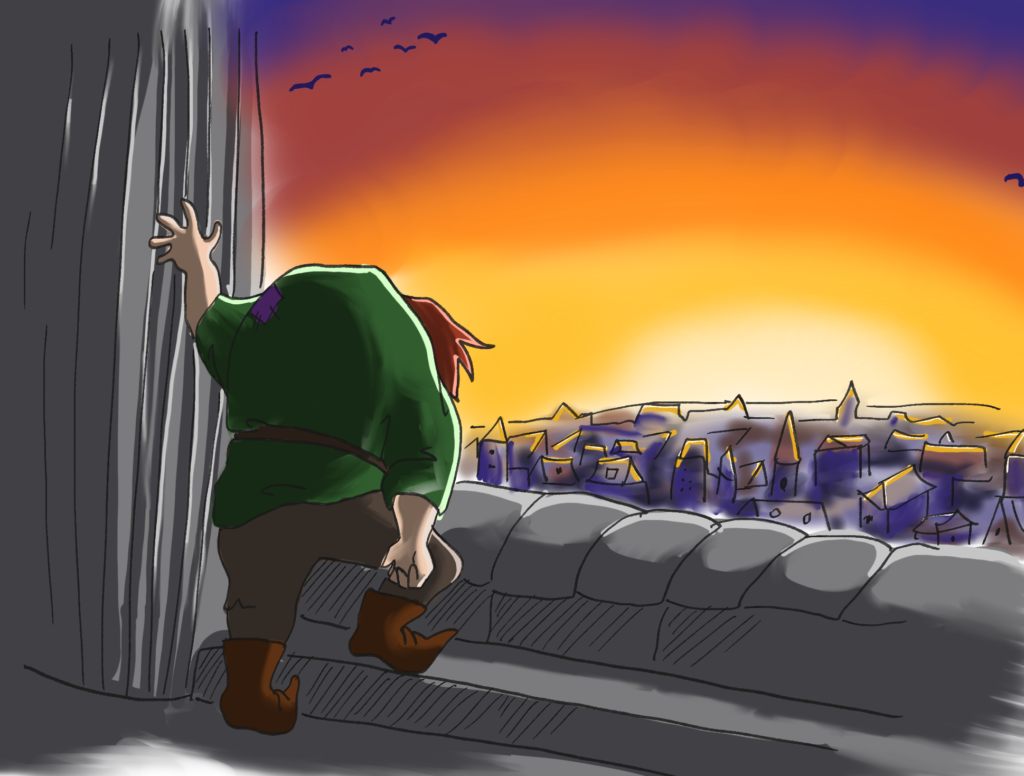
He lives in the cathedral, rings the bells like a man possessed, chats with gargoyles (as one does), and is hopelessly in love with Esmeralda. Oh – and, um… let’s just say he’s got a very expressive spine. Ahem.
But hold up – what exactly was going on with Quasimodo’s body? Was it just a “hunchback,” or was there a whole medical subplot Hugo forgot to explain?
Diagnosis: Crooked, Hard of Hearing, and Completely Misunderstood
In Hugo’s original novel, Quasimodo is described with all the subtlety of a hammer:
“[…] that tetrahedral nose, that horseshoe mouth, of the tiny left eye, obstructed by a bushy red eyebrow, while the right eye had vanished entirely beneath an enormous wen, of those irregular teeth, notched here and there like castle battlements, of that horny lip on which a tooth encroached like an elephant’s tusk, of that cleft chin […] a huge head sprouting red hair; between the two shoulders an enormous hump, the repercussions of which were evident from the front…”
Sounds… uncomfortable (and Jesus Christ, Victor!).
His symptoms read like a bingo card from an orthopedic nightmare:
- Scoliosis (sideways spine)
- Kyphosis (aka the classic hunchback)
- Mobility issues
- Partial deafness – probably from standing directly under a thousand-pound bell all day.
If he lived today, he’d be on a first-name basis with half the hospital staff. Back then? Society just called him a “monster.” How quaint.
What Was Actually Wrong With Quasimodo?
Here’s where it gets juicy: medical experts, historians, and your friendly neighborhood nerds have all tried diagnosing Quasimodo over the years. Top contenders include:
- Spondyloepiphyseal Dysplasia (SED): A rare genetic disorder that causes short stature and skeletal abnormalities. Checks out.
- Neurofibromatosis Type 1: Causes tumors on nerves, often leading to bone deformities. Also: very dramatic.
- Proteus Syndrome: The same condition Joseph Merrick (a.k.a. “The Elephant Man”) had — marked by asymmetric overgrowth of bones and tissues.
Or maybe Quasimodo just got a lousy roll in the genetic lottery. Or, hear me out — maybe Hugo just cranked the tragic dial to eleven for dramatic effect. Shocking, I know.
Back Then, You Didn’t Live With a Disability – You Were the Freak Show
In 15th-century Paris, “inclusion” meant you weren’t immediately thrown into a river. No ramps. No accessibility. Just trapdoors and torches.
Quasimodo isn’t seen as a person – he’s “a thing.” Even his adoptive father refers to him as a “creature.” The only things he gets are side-eyes, pity stares (if he’s lucky), and biceps made of steel from ringing those bells.
Today, he’d probably have a solid physical therapist, a cochlear implant, and a viral TikTok account. Now that’s progress.
What Victor Hugo Was (Probably) Trying to Say
Sure, Hugo had his quirks (like devoting an entire chapter to lovingly describing Notre-Dame – okay, bell tower kink much?), but he did have a soft spot for society’s outcasts.
Quasimodo isn’t just a medical case – he’s actually the most human character in the whole book.
While the so-called “normal” people lie, cheat, and murder their way through the plot, Quasimodo saves lives, shows empathy, and loves with zero expectations. So… who’s really the twisted one here?
Maybe Hugo wasn’t writing a medical textbook after all. Maybe he just wanted to say: Disability ≠ Worthlessness And Inner beauty > Societal standards.
(Yeah, that got a little deep. It happens. Moving on.)
So… What’s Left of Quasimodo Today?
Quasimodo lives on – not just in literature, but as a full-blown cultural icon. Disney gave him a smoother jawline and baby-seal eyes, and modern doctors tried slapping a diagnosis on him. Why?
Because Quasimodo isn’t just a character – he’s a symbol: For the things we don’t understand. For the people we exclude because they don’t fit the mold. And maybe – just maybe – for the parts of ourselves that feel a little crooked, a little loud, a little awkward… and still lovable.
And let’s be honest: without his “condition,” Quasimodo might’ve just looked like another Parisian guy in a robe — and “The Average Bell-Ringer of Notre-Dame” doesn’t exactly scream box office gold.
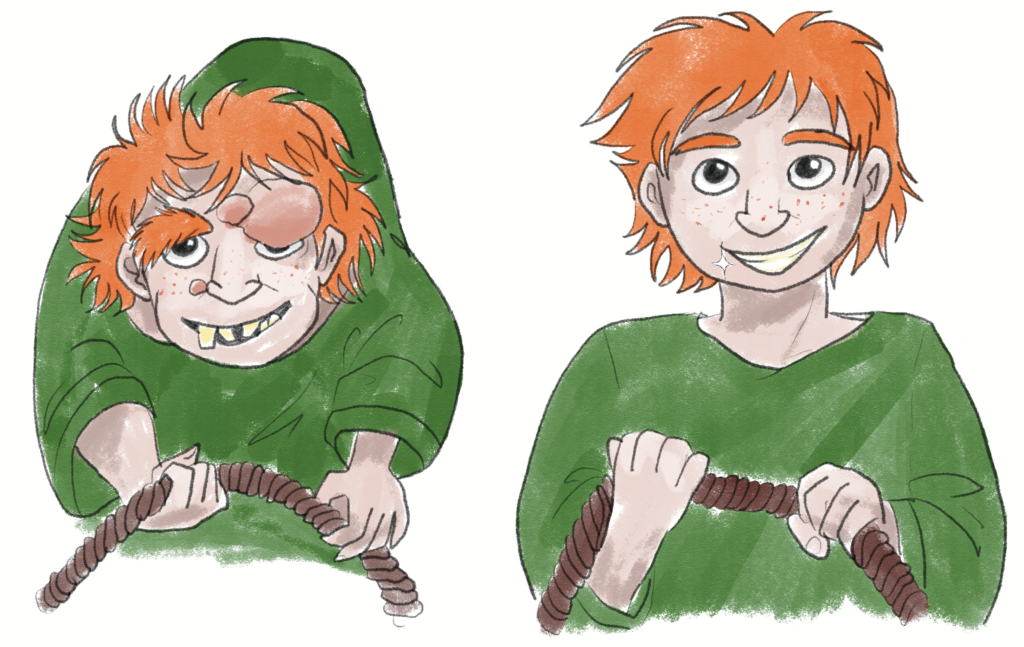
Final Diagnosis: Quasimodo Would Probably Be Okay Today – We Hope.
Whether it was SED, Neurofibromatosis, or good ol’ dramatic license, Quasimodo was – and is – more than his “condition.” He was strong. Loyal. Deeply empathetic. And, honestly? Kinda awesome.
The real question is: why did Hugo have to kill him off? (Spoiler alert – but let’s face it, everyone in that book dies. So much tragedy. So French.)
Today, Quasimodo could’ve had access to physical therapy, spinal supports, cochlear implants, and – let’s be real – probably a Disney+ spin-off series. But what he needed then – and what many still need today – was simply:
A world where he could exist as he is. No laughter. No judgment.
(Although… a good orthopedic surgeon wouldn’t have hurt either.)
References
Andreotti M, Caruso G, Massari L, Riva MA. Spinal Deformities in Romantic Operas. SPINE (Phila Pa 1976) 43(22): 1617-1618 (2018). doi: 10.1097/BRS.0000000000002399
Cox J. Quest for Quasimodo British Medical Journal Vol 291: 1801-1803 (1985).
Hugo V. Notre-Dame de Paris. London : Penguin Books : 1978
Pinson S ad Wolkenstein P. Neurofibromatosis type 1 or Von Recklingshausen’s disease. La revue de médecine interne 26: 196-215 (2005)/ doi: 10.1016/j.revmed.2004.06.011
Pugeat M. Quasimodo, the syndromic Hunchback of Notre Dame? Annales d’endocrinologie 80 : 195. doi : 10.1016/j.ando.2019.05.001
Seshadri K. Hunches on Hunchbacks. Indian Journal of Endocrinology and Metabolism 16 (2): 292-294. doi: 10.4103/2230-8210.93772
Yafi M. Homage to Notre-Dame. What happened to Quasimodo? Annales d’endocrinologie 80: 259 (2019). doi: 10.1016/j.ando.2019.04.015