
(And Why Some Children Have to Remember to Do It Every Night)
Once upon a time – which is how you know things are about to go very wrong – there was a beautiful water nymph named Ondine.
She was immortal, eternally young, and lived her best aquatic life in a world of waves, fountains, and suspiciously clear lakes. The only thing she lacked was a human soul. Which, according to mythology, is a bit like lacking Wi-Fi today: technically survivable, but socially inconvenient.
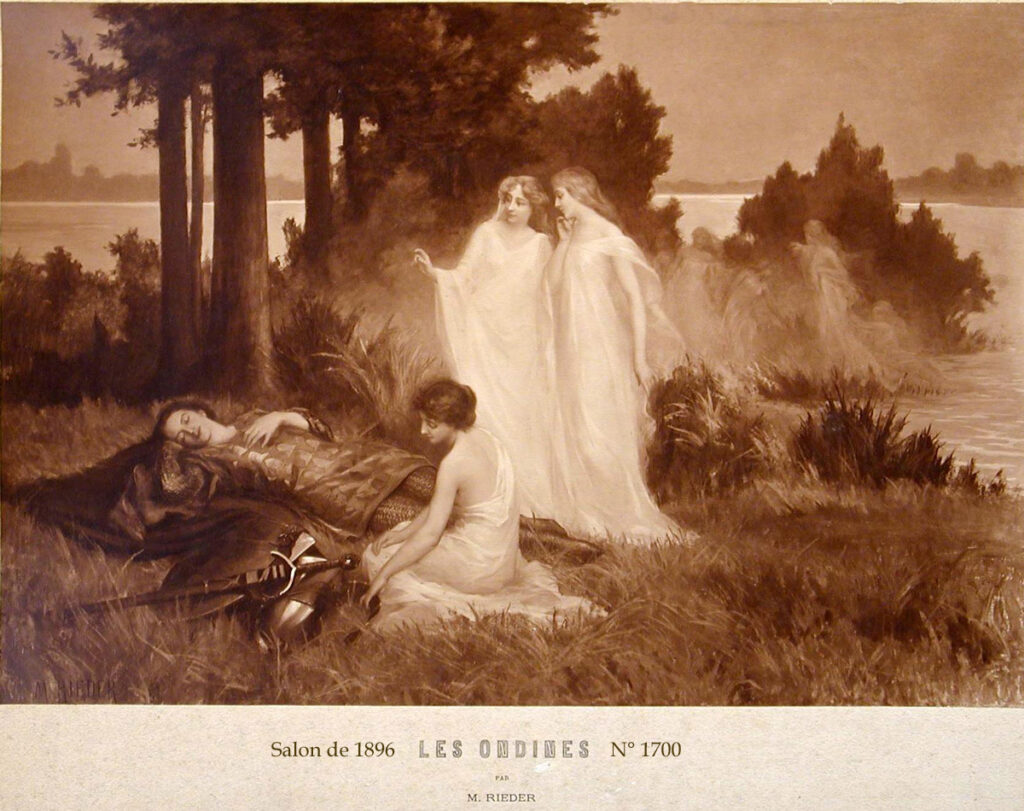
Fortunately, mythology offers a solution, and it’s always the same one: Fall in love with a human man. (Please do not ask why this is the only available option. Mythological HR was clearly understaffed.)
So Ondine went to the surface, met a man and – surprise – they fell deeply in love. He promised her eternal faithfulness. in a moment of poetic enthusiasm that will absolutely not age well, swore: “My every waking breath shall be my pledge of faithfulness.” This sentence will come back. Like a bad tweet.
They married. They had a child. Ondine got her soul and became human, lost her immortality, beauty and – most tragically – her husband’s loyalty. Because of course he cheated. Upon discovering the betrayal, Ondine reminded him of his lyrical vow and issued the most passive-aggressive curse in literary history:
“As long as you are awake, you shall breathe. But when you fall asleep… you will forget.” Sounds odd? Well. He fell asleep. He stopped breathing. End of story.
How Ondine managed to curse her ex despite now being fully human is unclear, unexplained, and absolutely not up for debate. Please consult the Fairy Tale Terms & Conditions, paragraph 47, subsection “Magic Still Works When Plot Requires It”.
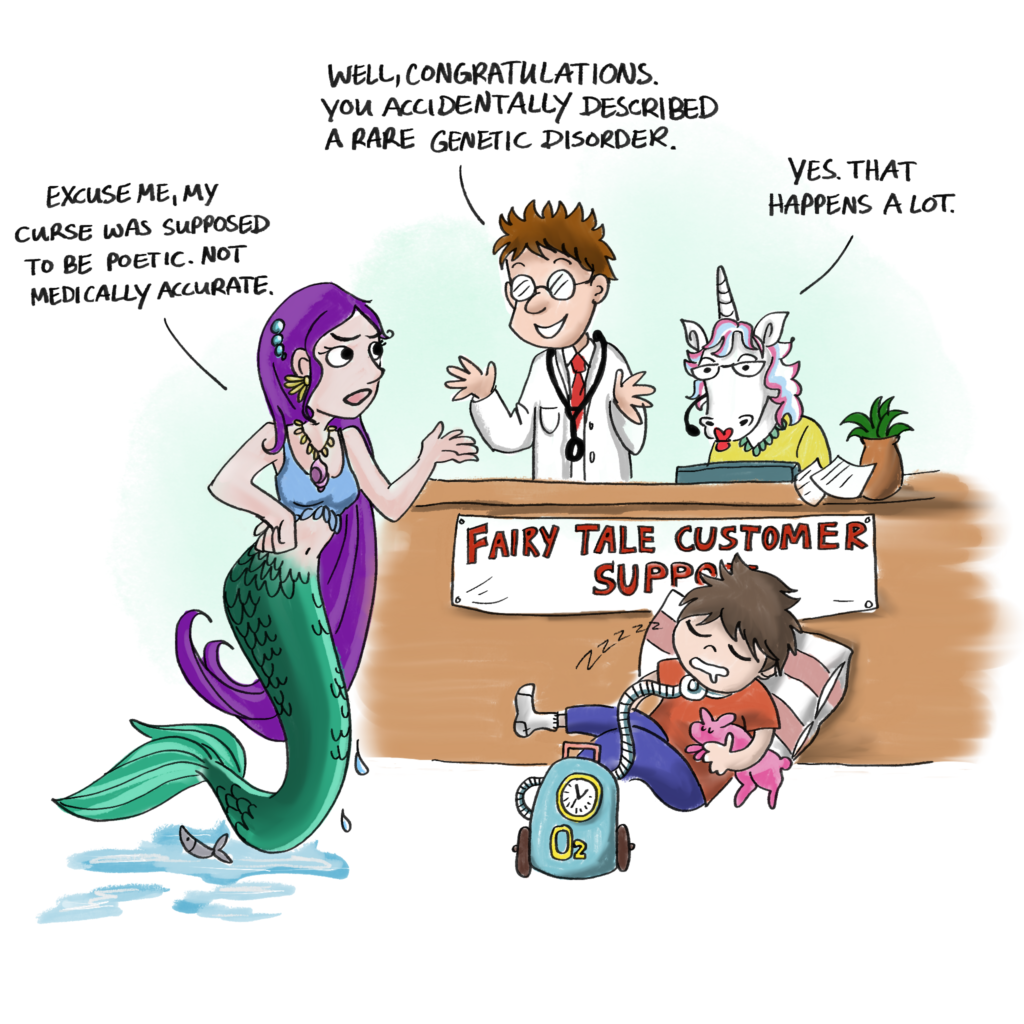
Fast-forward a couple of centuries, and medicine looked at this story and said: “Wow. That’s… disturbingly accurate.”
From Fairy Tale to Medical Diagnosis
In 1962, physicians Severinghaus and Mitchell coined the term “Ondine syndrome” to describe a terrifying medical reality they observed: the loss of automatic breathing, especially during sleep.
Today, doctors prefer the much less poetic (but legally safer) name: Congenital Central Hypoventilation Syndrome (CCHS). Same nightmare. Fewer mermaids. Much more paperwork.
CCHS is a rare, genetic, lifelong disorder in which the brain simply forgets to breathe automatically when it’s not consciously paying attention. There is no obstruction. No lung disease. No feeling of suffocation.
The body just… doesn’t get the memo.
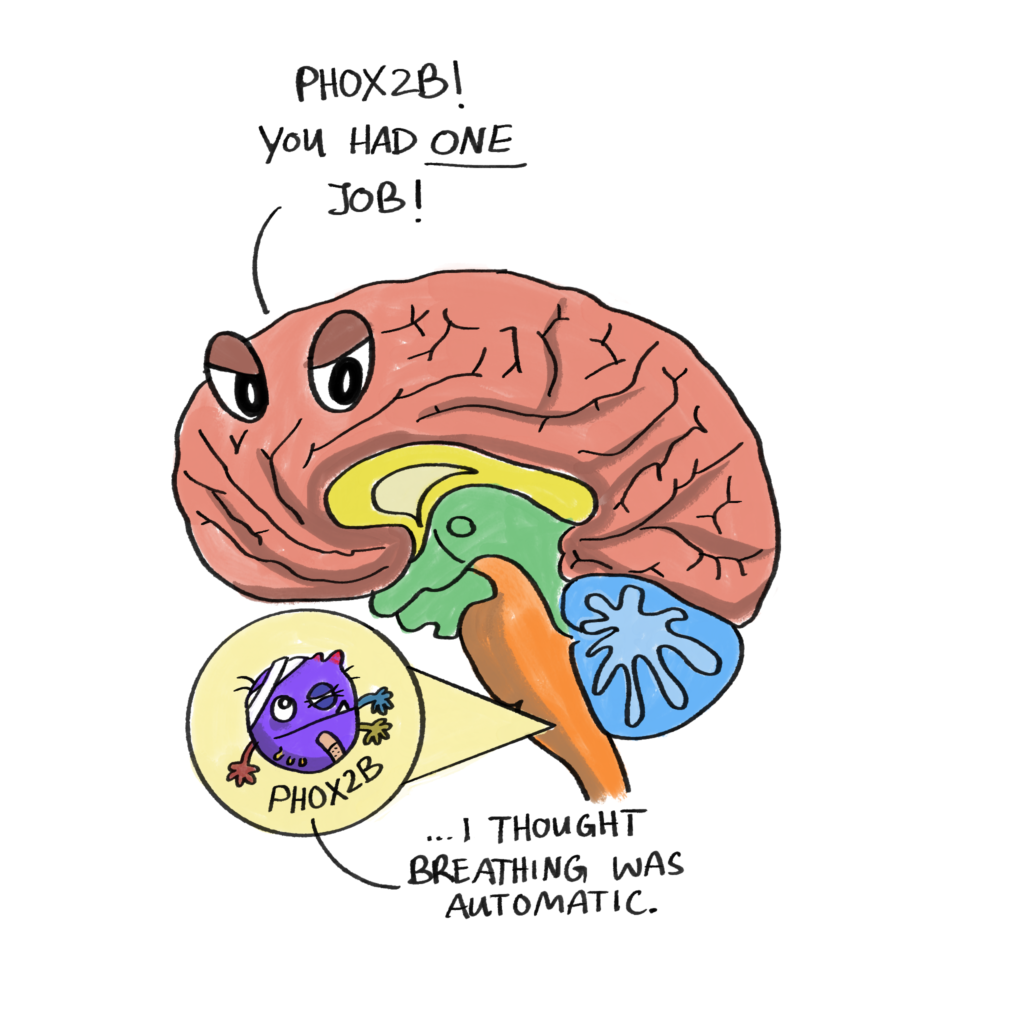
Most of us breathe thanks to a sophisticated brainstem autopilot that reacts to rising CO₂ levels. That’s why you cannot hold your breath forever, no matter how competitive your cousin gets in swimming pools. It’s a reflex. In CCHS, this system is broken – usually because of a mutation in a gene called PHOX2B, a key regulator of the autonomic nervous system.
In other words: The “autopilot” is offline. You sleep, you die. Sleep, in this context, is no longer “rest.” It’s a high-risk activity.
A Disease That Starts at Birth – and Never Really Sleeps
CCHS usually shows up in the first days of life. A newborn doesn’t cry. Doesn’t struggle. Doesn’t gasp (admittedly, the “doesn’t cry” part might sound tempting, but it is very much a medical emergency.).
They simply don’t breathe enough. Many babies survive only because someone notices in time and intervenes with mechanical ventilation, sometimes within hours of birth. Without treatment, the CCHS is fatal.
There are about 1,000 cases published in medical literature. In France, we know of roughly 200 patients. That’s rare – but not rare enough for the families living with it, obviously.
Children with CCHS often look completely healthy. They play. They laugh. They argue about bedtime. They build LEGO empires. But at night, and sometimes even during the day, they need machines to do what their brain won’t.
Ventilators. Tracheostomies. Sometimes diaphragm pacers that electrically stimulate the phrenic nerve to force the diaphragm to move. Sleeping becomes a monitored medical procedure. Naps are planned. Fevers are dangerous. A simple flu can mean hospitalization.
And the cruel irony? Most patients don’t feel short of breath. It doesn’t warn them. They don’t know they’re not breathing. Perks of a rare genetic disease, I guess, because who doesn’t love spontaneous episodes of life-threatening events?
Life With Ondine’s Curse (No Magic, Just Machines)
For families, CCHS means permanent vigilance. Parents don’t “go to sleep.” They supervise sleep.
Alarms replace lullabies. The electric generator sits in the basement, just in case. Every night is a negotiation – not only with your child who wants five more minutes to finish a LEGO spaceship, but also with technology that absolutely must not fail.
As children grow, new fears appear: Can they sleep at a friend’s house? Go on school trips? Travel alone? Eat enough veggies? Independence – the most basic human milestone – becomes a medical challenge.
When a Parent Refuses the Ending
Xénia Proton de la Chapelle is not a scientist. She didn’t come from a neuroscience lab. She graduated from business school. She built a career. She had three children; which is -frankly – already an achievement in itself! Then her fourth child, Joany, was born and diagnosed with Ondine’s Syndrome.
Like many parents, she started reading. Then fundraising. Then financing research with a few hundred thousand euros scraped together from friends and family. And then she did something unusual: She founded a biotech company. Because obviously, between diapers and ventilators, the logical next step is drug development.
The biotech start-up AtmosR was created with a very simple goal: Find a treatment so children with CCHS can live without machines.
Not in theory. Not in a PowerPoint. In real life. AtmosR now collaborates with Inserm laboratories in Paris and Bordeaux, works with research teams in Genoa, and tests promising molecules in vivo. At least one candidate compound is currently showing encouraging results!
Xénia became CEO not because she wanted to disrupt biotech – but because someone had to. When the patient is your child, motivation is not a problem.
Why Ondine’s Curse Matters Beyond Ondine
Treating CCHS wouldn’t just help a few hundred patients. The same biological mechanisms are involved in:
- Central sleep apnea
- Hypoventilation in heart failure
- Obesity-related breathing disorders
The cost of one CCHS patient to the healthcare system? Probably millions over a lifetime.
Once again, “rare” doesn’t mean “irrelevant.”
The Takeaway
Ondine’s curse started as a fairy tale about love, betrayal, and forgotten breathing.
Today, it’s a reminder that sometimes, the most serious scientific advances don’t start in labs – but in hospital rooms at 3 a.m., next to a ventilator.
If one day children with CCHS can fall asleep without machines, it won’t be because of magic. It will be because someone refused the fairy tale ending – and rewrote it with science.
To support families and research, please visit the French association for Ondine’s Syndrome : https://www.afsondine.org/. And https://cchs.uk/ for the United Kingdom
References
Bardanzellu F, Pintus MC, Fanos V, Marcialis MA. Neonatal Congenital Central Hypoventilation Syndrome: Why We Should not Sleep on it. Literature Review of Forty-two Neonatal Onset Cases. Current Pediatric Reviews 15:139-153 (2019). doi: 10.2174/1573396315666190621103954
Demartini Junior Z, Gatto L, Koppe GL, Francisco A, Guerios EE. Ondine’s curse: myth meets reality. Sleep Medecine 2:100012. doi: 10.1016/j.sleepx.2020.100012
Maloney MA, Kun SS, Keens TG, Perez IA. Congenital central hypoventilation syndrome:
diagnosis and management. Expert Review of Respiratory Medecine 1747-6348 (2018). doi: 10.1080/17476348.2018.1445970
Orrego-Gonzalez E. Ondine’s curse: the origin of the myth. Arq. Neuro-Psiquiatr. 78 (04) (2020). doi : 10.1590/0004-282X20190162
Trang H, Samuels M, Ceccherini I, Frerick M, Garcia-Teresa MA, Peters J, Schoeber J, Migdal M, Markstrom A, Ottonello G, Piumelli R, Estevao MH, Senecic-Cala I, Gnidovec-Strazisar B, Pfleger A, Porto-Abal R, Katz-Salomon M. Guidelines for diagnosis and management of congenital central hypoventilation syndrome. Orphanet Journal of Rare Diseases 15:252. doi: 10.1186/s13023-020-01460-2
Podcast with Xénia Proton de la Chapelle : https://themeta.news/le-declic-s2e10-xenia-proton-de-la-chapelle/